
Wind-Induced Galloping Control: Testing Standards Adopted by Solar Tracker Manufacturers
September 06, 2026
Wind is one of the most important structural design variables for utility-scale photovoltaic projects, but its impact on single-axis trackers goes beyond static pressure. Under certain combinations of wind speed, tracker orientation, turbulence, stiffness, and damping, aerodynamic forces can interact with structural motion and trigger torsional galloping or other aeroelastic instabilities.
For solar tracker manufacturers, this makes dynamic wind testing an essential part of responsible product development. We approach this challenge by combining structural engineering, intelligent control, and wind-resistant design to support reliable tracker operation in demanding environments.
This is not just a theoretical concern—it has real implications for how tracker performance should be specified and verified. For project developers working with solar tracker suppliers, this distinction matters. A tracker’s stated wind-resistance value should not be treated as the only indicator of dynamic stability. Buyers should also ask how the manufacturer evaluates critical wind speeds, tracker orientation, structural frequencies, damping, row position, and aeroelastic response.
However, current research indicates that standardized qualification alone does not provide a universal criterion for every torsional instability scenario. A recent experimental benchmark study tested a representative single-axis tracker in two wind tunnels and proposed a methodology for comparing critical velocities and aeroelastic stability. The research emphasizes that specific wind-tunnel testing remains valuable because instability depends on the individual tracker design and operating conditions.
We therefore see testing benchmarks as a layered process rather than a single number. Structural calculations can establish baseline strength and stiffness, while aerodynamic and aeroelastic testing can reveal dynamic behavior that static calculations may not capture.
Testing should also consider turbulence intensity, wind direction, structural damping, torsional stiffness, and tracker position within an array. Research on tracker arrays has found that aerodynamic interference between rows can influence instability behavior, while changes in tilt angle can alter how many rows experience significant aerodynamic instability.
For business project evaluation, these parameters help engineers distinguish between a tracker that simply survives a specified static load and one designed to manage complex wind-induced dynamic effects throughout its operating envelope.
The AT-Spark also features our self-developed octagonal torque tube. According to our product specifications, this structure increases specific stiffness by 40% and specific strength by 50%, supporting a more structurally efficient tracker design. The multi-slew-drive configuration enables system lengths of up to 143 meters while distributing torsional forces more evenly along the tracker.
Wind stow strategy is another critical consideration. Rather than treating stow as a simple emergency movement, we use a low-tilt wind-stow approach for AT-Spark to reduce exposure to severe wind effects. The system is specified for wind resistance up to 70 m/s according to ASCE 7-10, providing a substantial design benchmark for projects exposed to extreme wind conditions.
Our SmartTrail™ intelligent control system further supports tracker protection through algorithm-driven operation and four protection modes designed for extreme weather conditions. This combination allows mechanical and control strategies to work together instead of relying exclusively on structural capacity.
We believe this approach is especially important for large utility-scale projects, where long tracker rows, difficult terrain, and regional wind conditions can increase the consequences of aerodynamic instability. Antaisolar combines engineering design, intelligent tracking technology, testing processes, and lifecycle technical support to help customers make informed decisions before installation and during long-term operation.
As solar tracker suppliers continue developing longer and more efficient systems, we see rigorous testing benchmarks becoming increasingly important for project risk management. At Antaisolar, our AT-Spark combines a high-efficiency structural architecture, multi-slew-drive configuration, low-tilt wind stow, and SmartTrail™ intelligent control to address demanding wind environments. By integrating these elements, we aim to help utility-scale solar projects pursue both higher energy yield and dependable long-term performance.
For solar tracker manufacturers, this makes dynamic wind testing an essential part of responsible product development. We approach this challenge by combining structural engineering, intelligent control, and wind-resistant design to support reliable tracker operation in demanding environments.
Why Wind-Induced Galloping Requires Dynamic Testing
Solar trackers are relatively slender, flexible structures exposed to changing wind conditions. Unlike a conventional static load problem, galloping involves a feedback mechanism between airflow and structural movement. When aerodynamic forces add energy to structural oscillation faster than the system can dissipate it, vibration can grow significantly.This is not just a theoretical concern—it has real implications for how tracker performance should be specified and verified. For project developers working with solar tracker suppliers, this distinction matters. A tracker’s stated wind-resistance value should not be treated as the only indicator of dynamic stability. Buyers should also ask how the manufacturer evaluates critical wind speeds, tracker orientation, structural frequencies, damping, row position, and aeroelastic response.
Establishing Meaningful Testing Benchmarks for Solar Tracker Suppliers
IEC 62817 provides an important foundation for solar tracker qualification. The international standard defines test procedures for key tracker components and complete tracker systems, including procedures for measuring or calculating parameters reported in tracker specifications and pass/fail tests intended to distinguish robust designs from those more likely to experience premature failure.However, current research indicates that standardized qualification alone does not provide a universal criterion for every torsional instability scenario. A recent experimental benchmark study tested a representative single-axis tracker in two wind tunnels and proposed a methodology for comparing critical velocities and aeroelastic stability. The research emphasizes that specific wind-tunnel testing remains valuable because instability depends on the individual tracker design and operating conditions.
We therefore see testing benchmarks as a layered process rather than a single number. Structural calculations can establish baseline strength and stiffness, while aerodynamic and aeroelastic testing can reveal dynamic behavior that static calculations may not capture.
Key Parameters That Should Be Evaluated
A useful wind-testing program should examine more than maximum wind speed. Tilt angle is particularly important because the aerodynamic behavior of a tracker can change substantially as its orientation changes. Recent wind-tunnel research has shown that critical wind speed varies with tilt angle, while torsional frequency also has a significant influence on aerodynamic stability.Testing should also consider turbulence intensity, wind direction, structural damping, torsional stiffness, and tracker position within an array. Research on tracker arrays has found that aerodynamic interference between rows can influence instability behavior, while changes in tilt angle can alter how many rows experience significant aerodynamic instability.
For business project evaluation, these parameters help engineers distinguish between a tracker that simply survives a specified static load and one designed to manage complex wind-induced dynamic effects throughout its operating envelope.
How Antaisolar Addresses High-Wind Tracker Performance
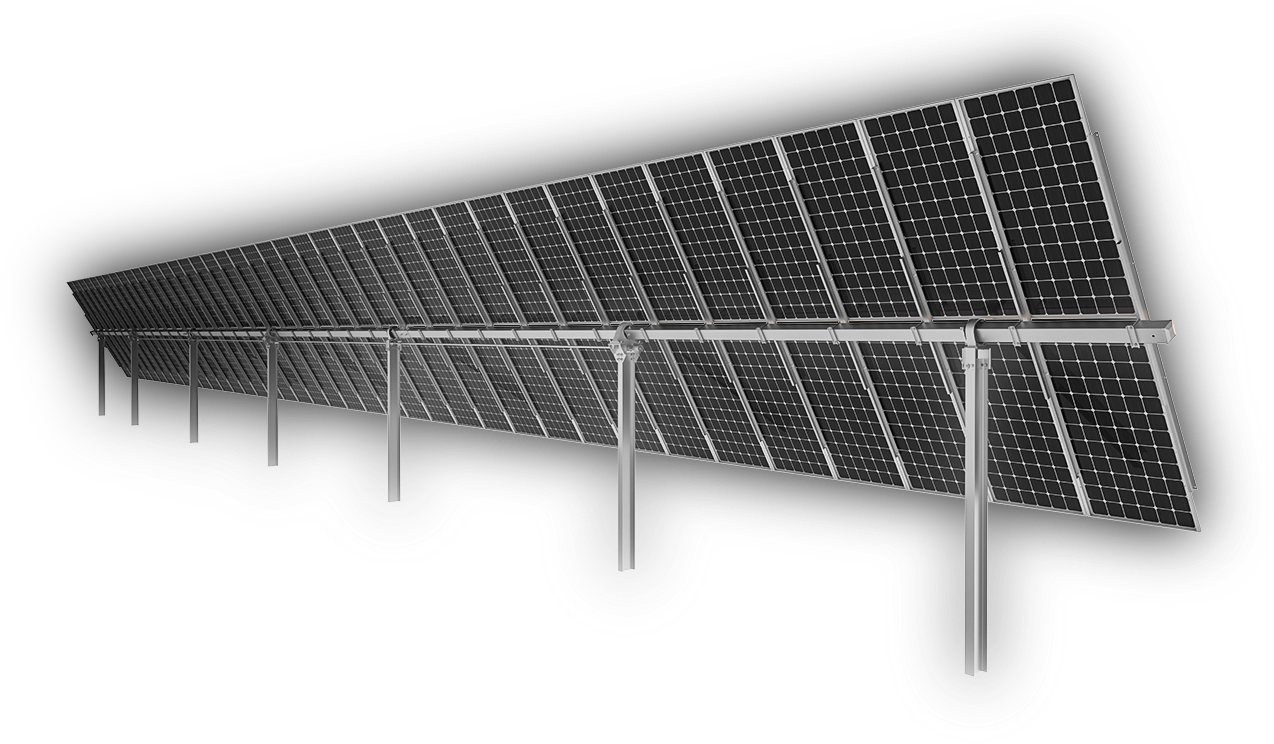
At Antaisolar, we integrate mechanical design and intelligent control to improve the wind resilience of our tracking systems. Our AT-Spark Multiple Slew-drive Single-axis Independent Solar Tracking System uses a multi-point drive architecture that distributes torsional forces along the torque tube rather than concentrating them at a single drive location.The AT-Spark also features our self-developed octagonal torque tube. According to our product specifications, this structure increases specific stiffness by 40% and specific strength by 50%, supporting a more structurally efficient tracker design. The multi-slew-drive configuration enables system lengths of up to 143 meters while distributing torsional forces more evenly along the tracker.
Wind stow strategy is another critical consideration. Rather than treating stow as a simple emergency movement, we use a low-tilt wind-stow approach for AT-Spark to reduce exposure to severe wind effects. The system is specified for wind resistance up to 70 m/s according to ASCE 7-10, providing a substantial design benchmark for projects exposed to extreme wind conditions.
Our SmartTrail™ intelligent control system further supports tracker protection through algorithm-driven operation and four protection modes designed for extreme weather conditions. This combination allows mechanical and control strategies to work together instead of relying exclusively on structural capacity.
From Wind-Speed Ratings to Lifecycle Confidence
For EPC contractors, developers, and engineering teams comparing solar tracker suppliers, wind performance should ultimately be assessed as part of lifecycle reliability. A credible evaluation should examine whether the supplier can provide clear design assumptions, applicable standards, structural calculations, testing evidence, and documented operating strategies.We believe this approach is especially important for large utility-scale projects, where long tracker rows, difficult terrain, and regional wind conditions can increase the consequences of aerodynamic instability. Antaisolar combines engineering design, intelligent tracking technology, testing processes, and lifecycle technical support to help customers make informed decisions before installation and during long-term operation.
Building More Resilient Tracker Designs
Wind-induced galloping demonstrates why solar tracker engineering cannot rely solely on static structural calculations or headline wind-speed ratings. Dynamic testing, aeroelastic analysis, structural stiffness, damping, wind-stow behavior, and array-level aerodynamic effects all contribute to a more complete understanding of tracker stability.As solar tracker suppliers continue developing longer and more efficient systems, we see rigorous testing benchmarks becoming increasingly important for project risk management. At Antaisolar, our AT-Spark combines a high-efficiency structural architecture, multi-slew-drive configuration, low-tilt wind stow, and SmartTrail™ intelligent control to address demanding wind environments. By integrating these elements, we aim to help utility-scale solar projects pursue both higher energy yield and dependable long-term performance.
end