
How to Evaluate Single-Axis Solar Tracker Manufacturers for Utility-Scale Projects
September 15, 2026
Choosing among single axis solar tracker manufacturers is a strategic procurement decision, not simply a comparison of product prices. Tracker performance influences energy yield, foundation requirements, installation efficiency, maintenance, and long-term project returns. For developers and EPC contractors, the right supplier should demonstrate more than an attractive datasheet. We recommend evaluating structural engineering, control technology, certification, project adaptability, service capability, and lifecycle economics before approving a tracker supplier.
We suggest reviewing the manufacturer's technical team, R&D resources, product development history, testing procedures, and ability to customize designs. IEC 62817 provides a useful reference because it defines design qualification procedures for both key tracker components and complete solar tracker systems.
We encourage buyers to examine maximum tracker length, module compatibility, slope tolerance, wind resistance, foundation options, and structural optimization. These specifications reveal how effectively a manufacturer has engineered its system for real project conditions rather than simply maximizing a single headline performance figure.
Terrain should receive particular attention. NREL research has shown that conventional backtracking assumptions can become less effective on cross-axis slopes because row geometry changes the shading relationship.
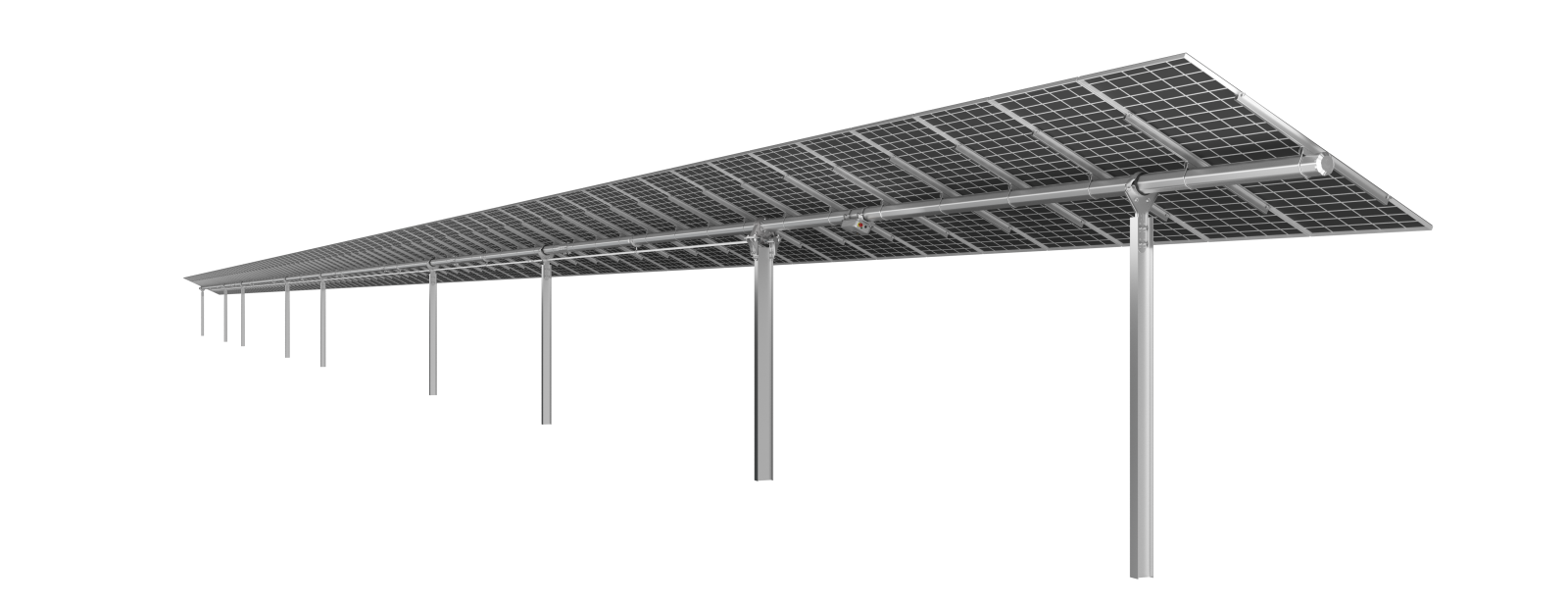
Our TAI-Simple incorporates advanced backtracking algorithms designed to maximize sunlight capture and mitigate shading losses. We developed the system as a single slew-drive, single-axis independent 1P tracker with a tracking range of up to ±60°, equivalent to a 120° total range.
For procurement teams, this makes software performance worth investigating alongside mechanical specifications. Ask manufacturers how their algorithms respond to terrain, row spacing, module dimensions, and changing solar positions.
Our TAI-Simple uses a 24 V DC motor with a single-point slew drive. The published datasheet specifies a tracking accuracy of ±2° and an operating temperature range of -30°C to 60°C. Its allowable wind speed is specified at up to 55 m/s according to ASCE 7-10, while its maximum north-south slope tolerance reaches 20% or 11°.
These figures should be evaluated against project-specific wind, temperature, terrain, and structural requirements rather than used as universal benchmarks.
TAI-Simple uses one controller per tracker and supports 300–1500 VDC string power, 90–264 VAC power, and backup lithium-battery power. The system supports Zigbee wireless mesh networking as well as Ethernet or RS485 cable communication. Its specified controller energy consumption is approximately 0.05 kWh per day.
We believe this type of architecture provides useful flexibility for utility-scale projects because the tracker can maintain intelligent control while accommodating different electrical and communication arrangements.
IEC 62817 is particularly relevant because its testing framework includes defined procedures for measuring or calculating tracker parameters and pass/fail testing intended to distinguish robust designs from designs more likely to experience early failures.
When evaluating single axis solar tracker manufacturers, we recommend requesting applicable certification documents, test reports, warranty terms, and evidence supporting critical specifications.
TAI-Simple uses pre-assembled and standardized components to simplify installation. Antaisolar states that its optimized column layout can reduce piling requirements, while its product information lists pre-assembly of up to 45%. The system can accommodate up to 90 modules per tracker, depending on module size, and supports modules in the 210, 182, and 166 formats.
For EPC contractors, these details can translate into easier construction planning and potentially lower balance-of-system costs.
We provide installation and commissioning training, remote and onsite maintenance, spare-parts support, and lifecycle after-sales services. Our global service network is designed to support projects beyond the initial equipment delivery.
This capability is particularly important for large PV plants where equipment issues can affect substantial generation capacity.
At Antaisolar, we apply this approach to TAI-Simple, our LCOE-optimizing tracker. By combining independent 1P tracking, intelligent backtracking, flexible power architecture, optimized structure, and lifecycle support, we aim to help developers and EPC contractors achieve reliable energy production and stronger long-term project economics.
Start with the Manufacturer's Engineering Capability
A credible tracker supplier should have engineering capabilities that extend across mechanical structures, drive systems, electronic controls, and software. These disciplines need to work together because a tracker is a complete electromechanical system rather than an isolated mounting structure.We suggest reviewing the manufacturer's technical team, R&D resources, product development history, testing procedures, and ability to customize designs. IEC 62817 provides a useful reference because it defines design qualification procedures for both key tracker components and complete solar tracker systems.
Evaluate Structural Design Beyond Basic Strength
Structural efficiency has a direct relationship with project economics. Torque tubes, bearings, dampers, posts, and connections must withstand operational and environmental loads while avoiding unnecessary material consumption.We encourage buyers to examine maximum tracker length, module compatibility, slope tolerance, wind resistance, foundation options, and structural optimization. These specifications reveal how effectively a manufacturer has engineered its system for real project conditions rather than simply maximizing a single headline performance figure.
Terrain should receive particular attention. NREL research has shown that conventional backtracking assumptions can become less effective on cross-axis slopes because row geometry changes the shading relationship.
Examine Backtracking and Energy-Yield Technology
A tracker should not merely follow the sun; it should position modules intelligently to manage row-to-row shading. Backtracking deliberately adjusts tracker angles to reduce shading, which can improve the useful irradiance received by the array. NREL research specifically examines how slope-aware approaches can address limitations of conventional backtracking on uneven terrain.Our TAI-Simple incorporates advanced backtracking algorithms designed to maximize sunlight capture and mitigate shading losses. We developed the system as a single slew-drive, single-axis independent 1P tracker with a tracking range of up to ±60°, equivalent to a 120° total range.
For procurement teams, this makes software performance worth investigating alongside mechanical specifications. Ask manufacturers how their algorithms respond to terrain, row spacing, module dimensions, and changing solar positions.
Verify Drive Reliability and Operating Conditions
Drive components experience repeated movement throughout the operating life of a solar plant. Their reliability can therefore affect both tracker availability and maintenance requirements.Our TAI-Simple uses a 24 V DC motor with a single-point slew drive. The published datasheet specifies a tracking accuracy of ±2° and an operating temperature range of -30°C to 60°C. Its allowable wind speed is specified at up to 55 m/s according to ASCE 7-10, while its maximum north-south slope tolerance reaches 20% or 11°.
These figures should be evaluated against project-specific wind, temperature, terrain, and structural requirements rather than used as universal benchmarks.
Check Power, Controls, and Communication Architecture
Modern trackers depend heavily on electronic control. Buyers should therefore investigate power redundancy, communications, monitoring, controller architecture, and protection functions.TAI-Simple uses one controller per tracker and supports 300–1500 VDC string power, 90–264 VAC power, and backup lithium-battery power. The system supports Zigbee wireless mesh networking as well as Ethernet or RS485 cable communication. Its specified controller energy consumption is approximately 0.05 kWh per day.
We believe this type of architecture provides useful flexibility for utility-scale projects because the tracker can maintain intelligent control while accommodating different electrical and communication arrangements.
Investigate Certification and Bankability
Certification should be treated as an engineering verification tool rather than a marketing statement. Developers and financial stakeholders need confidence that the equipment has undergone appropriate qualification and that published performance specifications can be independently understood.IEC 62817 is particularly relevant because its testing framework includes defined procedures for measuring or calculating tracker parameters and pass/fail testing intended to distinguish robust designs from designs more likely to experience early failures.
When evaluating single axis solar tracker manufacturers, we recommend requesting applicable certification documents, test reports, warranty terms, and evidence supporting critical specifications.
Consider Installation and Lifecycle Economics
The lowest initial equipment quotation does not necessarily produce the lowest project cost. Foundation quantities, installation labor, commissioning time, spare parts, maintenance access, and service response can substantially affect lifecycle economics.TAI-Simple uses pre-assembled and standardized components to simplify installation. Antaisolar states that its optimized column layout can reduce piling requirements, while its product information lists pre-assembly of up to 45%. The system can accommodate up to 90 modules per tracker, depending on module size, and supports modules in the 210, 182, and 166 formats.
For EPC contractors, these details can translate into easier construction planning and potentially lower balance-of-system costs.
Assess the Supplier's Long-Term Support
A tracker supplier's responsibilities should continue after shipment. Project owners need technical documentation, commissioning assistance, troubleshooting, spare parts, monitoring, and maintenance support throughout the asset lifecycle.We provide installation and commissioning training, remote and onsite maintenance, spare-parts support, and lifecycle after-sales services. Our global service network is designed to support projects beyond the initial equipment delivery.
This capability is particularly important for large PV plants where equipment issues can affect substantial generation capacity.
Making a Confident Manufacturer Selection
The strongest single axis solar tracker manufacturers distinguish themselves through integrated engineering rather than one impressive specification. Buyers should assess structural efficiency, tracking algorithms, drive reliability, terrain adaptability, electrical architecture, qualification, installation requirements, and lifecycle support as a connected package.At Antaisolar, we apply this approach to TAI-Simple, our LCOE-optimizing tracker. By combining independent 1P tracking, intelligent backtracking, flexible power architecture, optimized structure, and lifecycle support, we aim to help developers and EPC contractors achieve reliable energy production and stronger long-term project economics.
end