
How Flat Roof Solar Mounting Systems Handle Heavy Snow and Ice Loads
September 27, 2026
Heavy snow and ice accumulation can turn a commercial rooftop solar installation into a significant structural challenge. For businesses planning photovoltaic systems in cold and snowy regions, selecting a suitable mounting structure is therefore more than a matter of panel positioning. We need to consider roof capacity, snow distribution, mounting geometry, connections, and the interaction between the PV system and the existing building structure.
For commercial and industrial projects, choosing a right supplier is the first step toward reliability. A reliable design starts with understanding how snow behaves on a flat roof. Snow does not always remain evenly distributed, and solar panels can change local accumulation patterns. For commercial and industrial projects, these factors need to be addressed during structural design rather than after installation.
ASCE 7-22 includes dedicated provisions for flat-roof snow loads, partial loading, unbalanced snow, drifting snow, sliding snow, and rain-on-snow surcharge. This demonstrates why a single assumed snow value is not sufficient for every rooftop solar project.
Ice introduces another consideration. Freezing rain and ice accumulation can add substantial weight, while freeze-thaw conditions may affect drainage and create localized loading. We therefore need to evaluate the complete winter loading scenario rather than focusing only on ordinary snowfall.
The U.S. Department of Energy notes that snow can slide down tilted PV modules and accumulate unevenly near the lower edge. It also recommends that engineers avoid assuming uniform loading across a PV array because localized accumulation can increase stresses.
For flat-roof systems, this means array layout, panel elevation, tilt angle, spacing, parapets, and nearby rooftop equipment should all be considered. Areas around parapets or higher roof sections may also experience drifting, creating loads that differ significantly from the general roof condition.
This is especially important when concentrated loads occur at individual attachment or ballast points. U.S. Department of Energy guidance states that roof-mounted PV structures should account for additional structural loads and that mounting frames should transfer dead loads appropriately to the roof structure.
For engineers and project developers, structural calculations should therefore evaluate both the mounting system and the supporting roof. A high-capacity rail cannot compensate for an inadequately designed roof deck, purlin, joist, or connection.
ASCE's guidance on solar-paneled roofs specifically considers balanced, sliding, and drift snow conditions for different PV installation configurations. This makes site-specific engineering particularly important for projects in regions with substantial snowfall.
At Antaisolar, we should also consider drainage. When snow melts and subsequently refreezes, blocked drainage paths can contribute to ponding or ice formation. Maintaining suitable clearances and avoiding layouts that interfere with existing roof drainage can reduce operational and structural concerns.
However, the material specification should always be evaluated together with the actual connection design. Clamps, bolts, rails, splice points, and roof attachments need sufficient capacity under the project's calculated loads. We should also account for thermal movement because metal components and roofing materials expand and contract as temperatures change.
For business projects, documentation is equally important. Engineering teams need clear load assumptions, material information, installation details, and applicable test or certification data so that the mounting solution can be reviewed as part of the complete building design.
Before installation, we should review roof age, construction type, structural members, existing equipment, drainage, local snow conditions, and applicable building requirements. Where necessary, structural reinforcement should be considered before the PV system is installed.
This approach helps project owners avoid a costly situation where the selected mounting equipment appears adequate but the underlying roof cannot safely accommodate the combined loads. Proper engineering at the planning stage is generally more effective than correcting structural problems after construction.
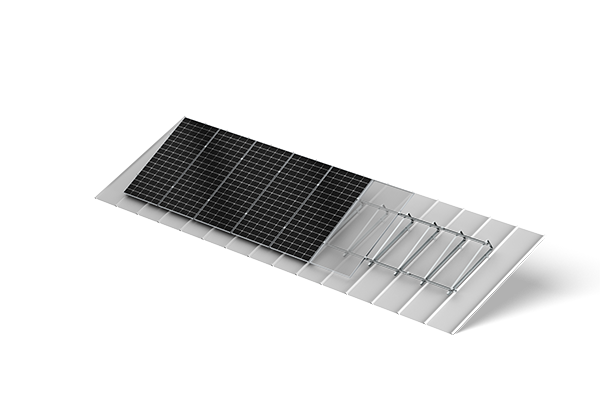
As a metal flat roof solar mounting supplier, we at Antaisolar provide Metal Roof Solutions designed for different metal sheet roof profiles, including Kliplok, trapezoidal, and standing seam roofs. Our product range includes base-and-rail, mini-rail, triangle, and adjustable-tilt configurations. The product catalog specifies AL6005-T6 aluminum for listed main structures or rails and SUS 304 fasteners for these systems.
Our approach also emphasizes project-specific engineering. We can provide customized mounting solutions according to roof characteristics and site requirements, helping EPC contractors, developers, and project owners address structural and environmental considerations before installation.
For commercial and industrial projects, choosing a right supplier is the first step toward reliability. A reliable design starts with understanding how snow behaves on a flat roof. Snow does not always remain evenly distributed, and solar panels can change local accumulation patterns. For commercial and industrial projects, these factors need to be addressed during structural design rather than after installation.
Why Snow and Ice Create Additional Roof Loads
A flat roof already has to support its own dead load and the snow loads specified by the applicable building code. Once we add PV modules, rails, clamps, and other equipment, the structure must accommodate the additional permanent weight as well.ASCE 7-22 includes dedicated provisions for flat-roof snow loads, partial loading, unbalanced snow, drifting snow, sliding snow, and rain-on-snow surcharge. This demonstrates why a single assumed snow value is not sufficient for every rooftop solar project.
Ice introduces another consideration. Freezing rain and ice accumulation can add substantial weight, while freeze-thaw conditions may affect drainage and create localized loading. We therefore need to evaluate the complete winter loading scenario rather than focusing only on ordinary snowfall.
Solar Panels Can Change Snow Accumulation
PV modules are not passive surfaces from a structural perspective. Their elevated surfaces can influence where snow collects, particularly around module edges and other changes in roof geometry.The U.S. Department of Energy notes that snow can slide down tilted PV modules and accumulate unevenly near the lower edge. It also recommends that engineers avoid assuming uniform loading across a PV array because localized accumulation can increase stresses.
For flat-roof systems, this means array layout, panel elevation, tilt angle, spacing, parapets, and nearby rooftop equipment should all be considered. Areas around parapets or higher roof sections may also experience drifting, creating loads that differ significantly from the general roof condition.
Load Paths Matter More Than Just Strong Components
A mounting system may use strong aluminum rails and stainless-steel fasteners, but component strength alone does not guarantee structural safety. We need to establish a continuous load path from the PV module through the clamps and mounting structure into the roof and, ultimately, the building's structural members.This is especially important when concentrated loads occur at individual attachment or ballast points. U.S. Department of Energy guidance states that roof-mounted PV structures should account for additional structural loads and that mounting frames should transfer dead loads appropriately to the roof structure.
For engineers and project developers, structural calculations should therefore evaluate both the mounting system and the supporting roof. A high-capacity rail cannot compensate for an inadequately designed roof deck, purlin, joist, or connection.
Managing Uneven Snow and Ice Accumulation
One of the biggest design challenges is that winter loading is rarely perfectly uniform. Wind can move snow across a roof, while parapets and rooftop equipment can create sheltered zones where snow drifts. PV arrays can also influence accumulation and sliding behavior.ASCE's guidance on solar-paneled roofs specifically considers balanced, sliding, and drift snow conditions for different PV installation configurations. This makes site-specific engineering particularly important for projects in regions with substantial snowfall.
At Antaisolar, we should also consider drainage. When snow melts and subsequently refreezes, blocked drainage paths can contribute to ponding or ice formation. Maintaining suitable clearances and avoiding layouts that interfere with existing roof drainage can reduce operational and structural concerns.
Choosing Materials and Connections for Winter Conditions
Material selection affects long-term reliability. Aluminum mounting components can provide a useful combination of strength, low weight, and corrosion resistance, while stainless-steel fasteners are commonly used for durable connections.However, the material specification should always be evaluated together with the actual connection design. Clamps, bolts, rails, splice points, and roof attachments need sufficient capacity under the project's calculated loads. We should also account for thermal movement because metal components and roofing materials expand and contract as temperatures change.
For business projects, documentation is equally important. Engineering teams need clear load assumptions, material information, installation details, and applicable test or certification data so that the mounting solution can be reviewed as part of the complete building design.
Designing for the Building, Not Just the Solar Array
A common mistake is to evaluate the mounting structure independently from the existing roof. A commercially viable solar project must instead consider the building as an integrated structural system.Before installation, we should review roof age, construction type, structural members, existing equipment, drainage, local snow conditions, and applicable building requirements. Where necessary, structural reinforcement should be considered before the PV system is installed.
This approach helps project owners avoid a costly situation where the selected mounting equipment appears adequate but the underlying roof cannot safely accommodate the combined loads. Proper engineering at the planning stage is generally more effective than correcting structural problems after construction.
Building a Reliable Winter-Ready Solar Project
For businesses operating in snowy climates, the performance of a flat-roof solar installation depends on more than module efficiency. We need to design for the actual environmental conditions, understand how panels affect snow behavior, verify the complete load path, and ensure that the roof itself can support the proposed system.As a metal flat roof solar mounting supplier, we at Antaisolar provide Metal Roof Solutions designed for different metal sheet roof profiles, including Kliplok, trapezoidal, and standing seam roofs. Our product range includes base-and-rail, mini-rail, triangle, and adjustable-tilt configurations. The product catalog specifies AL6005-T6 aluminum for listed main structures or rails and SUS 304 fasteners for these systems.
Our approach also emphasizes project-specific engineering. We can provide customized mounting solutions according to roof characteristics and site requirements, helping EPC contractors, developers, and project owners address structural and environmental considerations before installation.
end