
Engineering Stronger Foundations: How Advanced Solar Tracker Companies Build Structural Reliability
September 12, 2026
Utility-scale solar projects increasingly demand tracker structures that can handle complex terrain, long spans, changing loads, and demanding construction conditions. For solar tracker companies, meeting these requirements involves far more than designing a mechanism that follows the sun. We need to coordinate structural stiffness, load distribution, bearing performance, drive architecture, installation efficiency, and long-term tracking accuracy. At Antaisolar, we approach tracker development as an integrated engineering challenge, with structural design playing a central role in system reliability.
This is why advanced solar tracker companies need to consider site adaptability during product development rather than treating it as an installation-stage adjustment. A structurally efficient system should accommodate realistic terrain conditions while maintaining mechanical alignment and predictable movement.
International qualification frameworks also reinforce the importance of systematic testing. IEC 62817 establishes design qualification procedures for key tracker components and complete tracker systems, with tests intended to provide consistent specification data and evaluate performance under defined conditions.
We address this challenge in the AT-Spark Multiple Slew-drive Single-axis Independent Solar Tracking System by using a multi-point drive architecture. The design distributes torsional forces more evenly along the torque tube, enabling tracker spans of up to 143 meters and, according to Antaisolar's published information, potentially reducing pile quantities by up to 20% under suitable project designs.
The torque tube itself is another important structural element. Our self-developed octagonal torque tube increases specific stiffness by 40% and specific strength by 50%. This combination improves structural efficiency while helping us reduce material consumption and support longer tracker configurations.
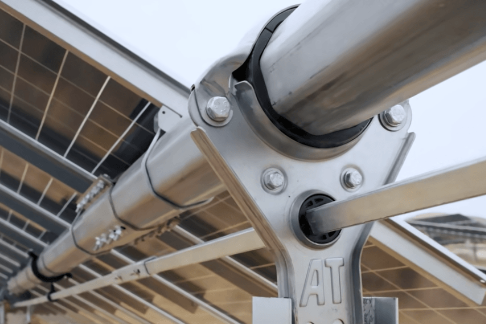
AT-Spark addresses this requirement through a patented dual-spherical bearing design. The bearing enables omni-directional rotation and adapts to north-south slopes of up to 15%. This allows the tracker structure to accommodate changing site geometry while maintaining the mechanical movement required for solar tracking.
For EPC teams, this capability has practical value. Greater terrain tolerance can reduce the need for excessive site grading or complicated field adjustments, helping engineers evaluate a broader range of potential project locations.
We have optimized AT-Spark’s component design to address synchronous shaft sagging. The objective is to maintain more consistent mechanical transmission and long-term tracking accuracy rather than treating structural reliability and tracking performance as separate concerns.
The bearing housing also contributes to installation practicality. AT-Spark uses a flip-type bearing housing with snap-fit spherical bearings, simplifying installation and disassembly. Our product information indicates that this quick-install bearing housing can improve core component installation efficiency by 25%.
This lifecycle perspective is consistent with the purpose of IEC 62817, which uses defined test procedures to establish comparable tracker parameters and distinguish designs likely to experience premature failure from designs suitable for their specified applications. The standard also makes clear that tracker qualification does not replace project-specific structural and foundation requirements.
We therefore consider engineering performance together with construction practicality. A component that is structurally capable but difficult to assemble can create unnecessary project risk. AT-Spark’s snap-fit bearing concept is designed to simplify field handling while supporting repeatable installation.
A useful evaluation should also distinguish between headline specifications and the engineering principles behind them. Longer tracker rows, for example, can provide project-level advantages, but only when the structural architecture can manage the associated mechanical and environmental demands.
At Antaisolar, we combine these considerations in our tracker development process. AT-Spark integrates an octagonal torque tube, multi-slew-drive architecture, dual-spherical bearings, and optimized synchronization components to create a structure designed around both performance and practical deployment.
We believe AT-Spark demonstrates how these requirements can be addressed through coordinated mechanical engineering rather than isolated component improvements. Its 143-meter maximum system length, 15% north-south slope tolerance, optimized shaft support, and installation-focused bearing design reflect our focus on structural efficiency and project practicality.
For utility-scale developers and EPC contractors, the right tracker is ultimately more than a tracking mechanism. It is a structural system whose engineering decisions influence construction, operation, maintenance, and long-term project performance. By combining structural innovation with site adaptability and installation efficiency, we continue to develop solar mounting solutions at Antaisolar for projects with different site and installation requirements.
Structural Engineering Starts with the Project Environment
Every utility-scale site presents different engineering conditions. Terrain slope, wind exposure, soil characteristics, tracker geometry, module configuration, and row length can all affect structural requirements. A tracker designed for flat terrain may therefore require different structural solutions when deployed across uneven ground.This is why advanced solar tracker companies need to consider site adaptability during product development rather than treating it as an installation-stage adjustment. A structurally efficient system should accommodate realistic terrain conditions while maintaining mechanical alignment and predictable movement.
International qualification frameworks also reinforce the importance of systematic testing. IEC 62817 establishes design qualification procedures for key tracker components and complete tracker systems, with tests intended to provide consistent specification data and evaluate performance under defined conditions.
How Solar Tracker Companies Manage Load Distribution
Load distribution becomes particularly important as tracker structures become longer. Wind forces, module weight, and mechanical movement can generate stresses throughout the torque tube and supporting components. Concentrating these forces at limited drive points can increase structural demands and complicate system design.We address this challenge in the AT-Spark Multiple Slew-drive Single-axis Independent Solar Tracking System by using a multi-point drive architecture. The design distributes torsional forces more evenly along the torque tube, enabling tracker spans of up to 143 meters and, according to Antaisolar's published information, potentially reducing pile quantities by up to 20% under suitable project designs.
The torque tube itself is another important structural element. Our self-developed octagonal torque tube increases specific stiffness by 40% and specific strength by 50%. This combination improves structural efficiency while helping us reduce material consumption and support longer tracker configurations.
Adapting Structural Systems to Sloped Sites
Terrain adaptability can directly influence project feasibility. Significant north-south slopes may create alignment challenges for tracker rows, bearings, and drive systems. If every irregularity requires extensive field modification, construction can become slower and more labor-intensive.AT-Spark addresses this requirement through a patented dual-spherical bearing design. The bearing enables omni-directional rotation and adapts to north-south slopes of up to 15%. This allows the tracker structure to accommodate changing site geometry while maintaining the mechanical movement required for solar tracking.
For EPC teams, this capability has practical value. Greater terrain tolerance can reduce the need for excessive site grading or complicated field adjustments, helping engineers evaluate a broader range of potential project locations.
Precision Matters Beyond Initial Structural Strength
A tracker can have adequate strength yet still encounter operational problems if its moving components gradually lose alignment. Long structures are particularly sensitive to deflection, connection tolerances, and shaft behavior. Maintaining synchronized movement therefore requires attention to the complete mechanical transmission system.We have optimized AT-Spark’s component design to address synchronous shaft sagging. The objective is to maintain more consistent mechanical transmission and long-term tracking accuracy rather than treating structural reliability and tracking performance as separate concerns.
The bearing housing also contributes to installation practicality. AT-Spark uses a flip-type bearing housing with snap-fit spherical bearings, simplifying installation and disassembly. Our product information indicates that this quick-install bearing housing can improve core component installation efficiency by 25%.
Designing for Testing, Installation, and Lifecycle Performance
Structural engineering does not end when a design passes a calculation. Solar tracker companies must consider how components behave during manufacturing, transportation, installation, operation, maintenance, and extreme environmental exposure.This lifecycle perspective is consistent with the purpose of IEC 62817, which uses defined test procedures to establish comparable tracker parameters and distinguish designs likely to experience premature failure from designs suitable for their specified applications. The standard also makes clear that tracker qualification does not replace project-specific structural and foundation requirements.
We therefore consider engineering performance together with construction practicality. A component that is structurally capable but difficult to assemble can create unnecessary project risk. AT-Spark’s snap-fit bearing concept is designed to simplify field handling while supporting repeatable installation.
Building Structural Confidence into Tracker Selection
For developers and EPC contractors evaluating solar tracker companies, structural engineering capability should be assessed through several dimensions. These include load distribution, stiffness, terrain adaptability, mechanical synchronization, component design, qualification testing, and installation requirements.A useful evaluation should also distinguish between headline specifications and the engineering principles behind them. Longer tracker rows, for example, can provide project-level advantages, but only when the structural architecture can manage the associated mechanical and environmental demands.
At Antaisolar, we combine these considerations in our tracker development process. AT-Spark integrates an octagonal torque tube, multi-slew-drive architecture, dual-spherical bearings, and optimized synchronization components to create a structure designed around both performance and practical deployment.
Engineering for Reliable Solar Tracking at Scale
The evolution of utility-scale photovoltaics is pushing solar tracker companies toward more sophisticated structural solutions. Projects need systems that can accommodate challenging terrain, distribute loads effectively, maintain tracking precision, and remain practical to install at large scale.We believe AT-Spark demonstrates how these requirements can be addressed through coordinated mechanical engineering rather than isolated component improvements. Its 143-meter maximum system length, 15% north-south slope tolerance, optimized shaft support, and installation-focused bearing design reflect our focus on structural efficiency and project practicality.
For utility-scale developers and EPC contractors, the right tracker is ultimately more than a tracking mechanism. It is a structural system whose engineering decisions influence construction, operation, maintenance, and long-term project performance. By combining structural innovation with site adaptability and installation efficiency, we continue to develop solar mounting solutions at Antaisolar for projects with different site and installation requirements.
end