
Customizing Vertical Solar Mount Brackets for Non-Standard Beams and Posts
September 21, 2026
Choosing mounting hardware for a standard steel post is relatively straightforward. Real projects, however, often involve existing beams, irregular posts, unusual dimensions, or site constraints that do not match catalog components. For EPC contractors, engineers, and project owners, the challenge is finding a connection that transfers loads predictably, protects the module, simplifies installation, and remains practical to manufacture and inspect.
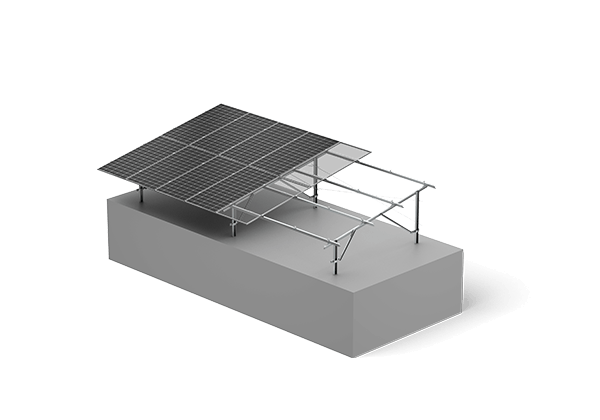
A vertical PV array also presents a distinct structural condition. The frame must resist loads transferred from modules into rails, beams, posts, and foundations. The U.S. Department of Energy notes that PV mounting structures must provide stable, durable support capable of withstanding environmental exposure over long service periods. Vertical arrangements can also experience higher wind loading than tilted systems, so customization should begin with structural requirements rather than appearance alone.
The bracket designer then needs module and mounting-frame information. Relevant inputs include module dimensions, frame configuration, rail position, clearances, array geometry, and the intended vertical solar mount orientation. Combining these details prevents a common mistake: designing a bracket around the beam while overlooking the module-frame connection.
Wind deserves particular attention. ASCE 7-22 provides design-load provisions and specifically includes provisions for ground-mounted solar facilities. The Department of Energy also recommends racking designs that anticipate lateral movement and resist wind forces from different approach angles. For customized connections, bolt locations, plate geometry, eccentricity, and local member strength need engineering review rather than visual approval.
Clearance is another practical consideration. A bracket may meet calculated strength requirements but become difficult to install if tools cannot reach the fasteners. We should check bolt access, tightening space, module clearance, tolerances, and the sequence of assembly. These details can have a direct effect on field labor and installation risk.
Fasteners deserve the same attention as the bracket itself. The Department of Energy highlights critical fastened joints in PV systems and identifies inadequate strength, poor installation practices, and vibration-induced loosening among potential failure concerns. A customized bracket should specify compatible fasteners, connection requirements, and installation procedures instead of treating hardware as an afterthought.
Prototype checks can add another layer of confidence. A sample assembly can confirm fit, tool access, clamping behavior, and installation sequence before mass production. This is particularly useful when adapting brackets to existing infrastructure, where field conditions may differ from drawings.
For EPC and commercial teams, the design process should consider more than engineering capacity. We should evaluate fabrication tolerances, repeatability, packaging, transport, installation time, inspection, and future maintenance. A successful customization is one that works reliably from the engineering office through commissioning.
At the project-solution stage, we can apply this approach through Antaisolar's vertical solar mount solutions. Our system supports both portrait and landscape module layouts and offers optional ground screw or concrete foundations. It is intended for applications including pastures, fencing, highways, and other land-constrained sites, providing a practical basis for projects where conventional mounting arrangements may not fit the site.
Why Standard Brackets May Not Be Enough
Standardized components are valuable because they reduce design and installation complexity. Yet non-standard structural members can introduce dimensional and geometric differences that make a direct connection unsuitable. Beam width, flange thickness, post shape, hole locations, available clearance, and connection orientation can all affect bracket selection.A vertical PV array also presents a distinct structural condition. The frame must resist loads transferred from modules into rails, beams, posts, and foundations. The U.S. Department of Energy notes that PV mounting structures must provide stable, durable support capable of withstanding environmental exposure over long service periods. Vertical arrangements can also experience higher wind loading than tilted systems, so customization should begin with structural requirements rather than appearance alone.
Start with Accurate Beam and Post Data
Good customization starts with a reliable interface definition. We should document the structural member's cross-section, dimensions, material, thickness, orientation, connection surfaces, and allowable attachment locations. Existing structures should also be inspected for corrosion, deformation, weld conditions, and access limitations before a bracket is finalized.The bracket designer then needs module and mounting-frame information. Relevant inputs include module dimensions, frame configuration, rail position, clearances, array geometry, and the intended vertical solar mount orientation. Combining these details prevents a common mistake: designing a bracket around the beam while overlooking the module-frame connection.
Design the Load Path, Not Just the Fit
A bracket that physically fits a post is not necessarily a structurally suitable bracket. We need to understand how forces travel from the module to the bracket, from the bracket to the beam or post, and finally into the supporting structure and foundation.Wind deserves particular attention. ASCE 7-22 provides design-load provisions and specifically includes provisions for ground-mounted solar facilities. The Department of Energy also recommends racking designs that anticipate lateral movement and resist wind forces from different approach angles. For customized connections, bolt locations, plate geometry, eccentricity, and local member strength need engineering review rather than visual approval.
Optimize Connection Geometry
Customization does not mean creating a completely unique component for every project. A better approach is to modify the interface while preserving repeatable, manufacturable features. Adjustable holes, slotted connection points, adapter plates, spacers, or tailored clamps can help accommodate differences in structural members while keeping the overall assembly manageable.Clearance is another practical consideration. A bracket may meet calculated strength requirements but become difficult to install if tools cannot reach the fasteners. We should check bolt access, tightening space, module clearance, tolerances, and the sequence of assembly. These details can have a direct effect on field labor and installation risk.
Select Materials and Protection Carefully
Material selection should reflect the project environment and the connection's structural demands. Outdoor PV structures face moisture, temperature changes, and corrosive conditions. The connection should use appropriate material compatibility and corrosion protection.Fasteners deserve the same attention as the bracket itself. The Department of Energy highlights critical fastened joints in PV systems and identifies inadequate strength, poor installation practices, and vibration-induced loosening among potential failure concerns. A customized bracket should specify compatible fasteners, connection requirements, and installation procedures instead of treating hardware as an afterthought.
Validate Before Production
Before releasing a customized bracket for mass production, we should verify both engineering and installation assumptions. Structural calculations can assess member capacity, connection forces, bolt behavior, and relevant load combinations. Depending on the project and jurisdiction, the design may need review against applicable structural standards and local permitting requirements.Prototype checks can add another layer of confidence. A sample assembly can confirm fit, tool access, clamping behavior, and installation sequence before mass production. This is particularly useful when adapting brackets to existing infrastructure, where field conditions may differ from drawings.
Design for Project-Level Efficiency
The best customized connection balances structural performance with procurement and installation efficiency. Excessively complicated brackets can increase part counts, fabrication steps, inventory requirements, and opportunities for assembly errors. Conversely, an overly generic bracket may require field modification, drilling, shimming, or other work that was not included in the original installation plan.For EPC and commercial teams, the design process should consider more than engineering capacity. We should evaluate fabrication tolerances, repeatability, packaging, transport, installation time, inspection, and future maintenance. A successful customization is one that works reliably from the engineering office through commissioning.
A Practical Approach to Vertical PV Customization
Non-standard beams and posts do not have to become obstacles to vertical solar deployment. The key is to treat the bracket as part of a complete structural load path rather than an isolated piece of hardware. Accurate dimensions, site-specific loads, suitable materials, accessible connections, and verification should guide the design from the beginning.At the project-solution stage, we can apply this approach through Antaisolar's vertical solar mount solutions. Our system supports both portrait and landscape module layouts and offers optional ground screw or concrete foundations. It is intended for applications including pastures, fencing, highways, and other land-constrained sites, providing a practical basis for projects where conventional mounting arrangements may not fit the site.
end