
How Do Solar Trackers Survive High Winds? Stow Strategies, Drive Systems, and Structural Design
August 04, 2026
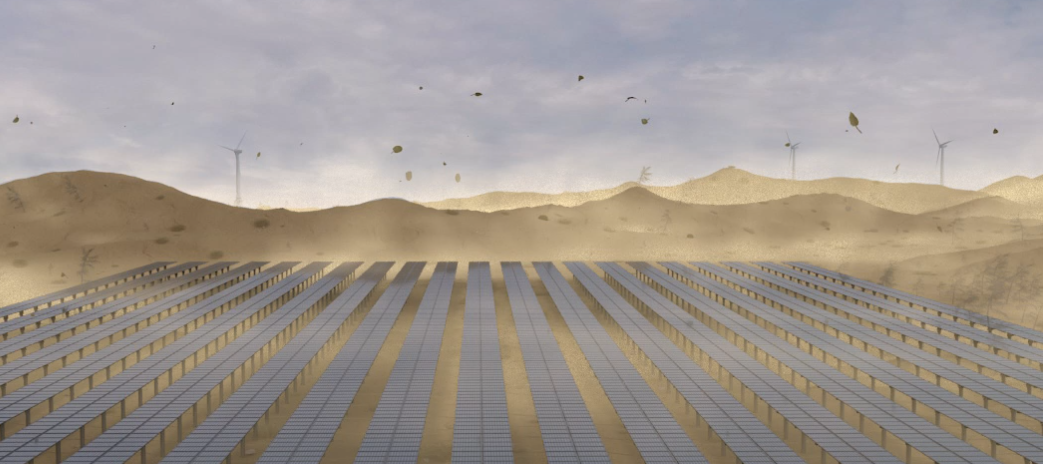
What Are the Consequences of the Threat Posed by Wind to Solar Trackers?
Solar trackers survive high winds through three interdependent layers: stow control (the intelligence that triggers defensive positioning), drive system design (the mechanical architecture that distributes forces), and structural engineering (the physical components that withstand loads).
Solar Tracker Wind Stow: The First Line of Defense
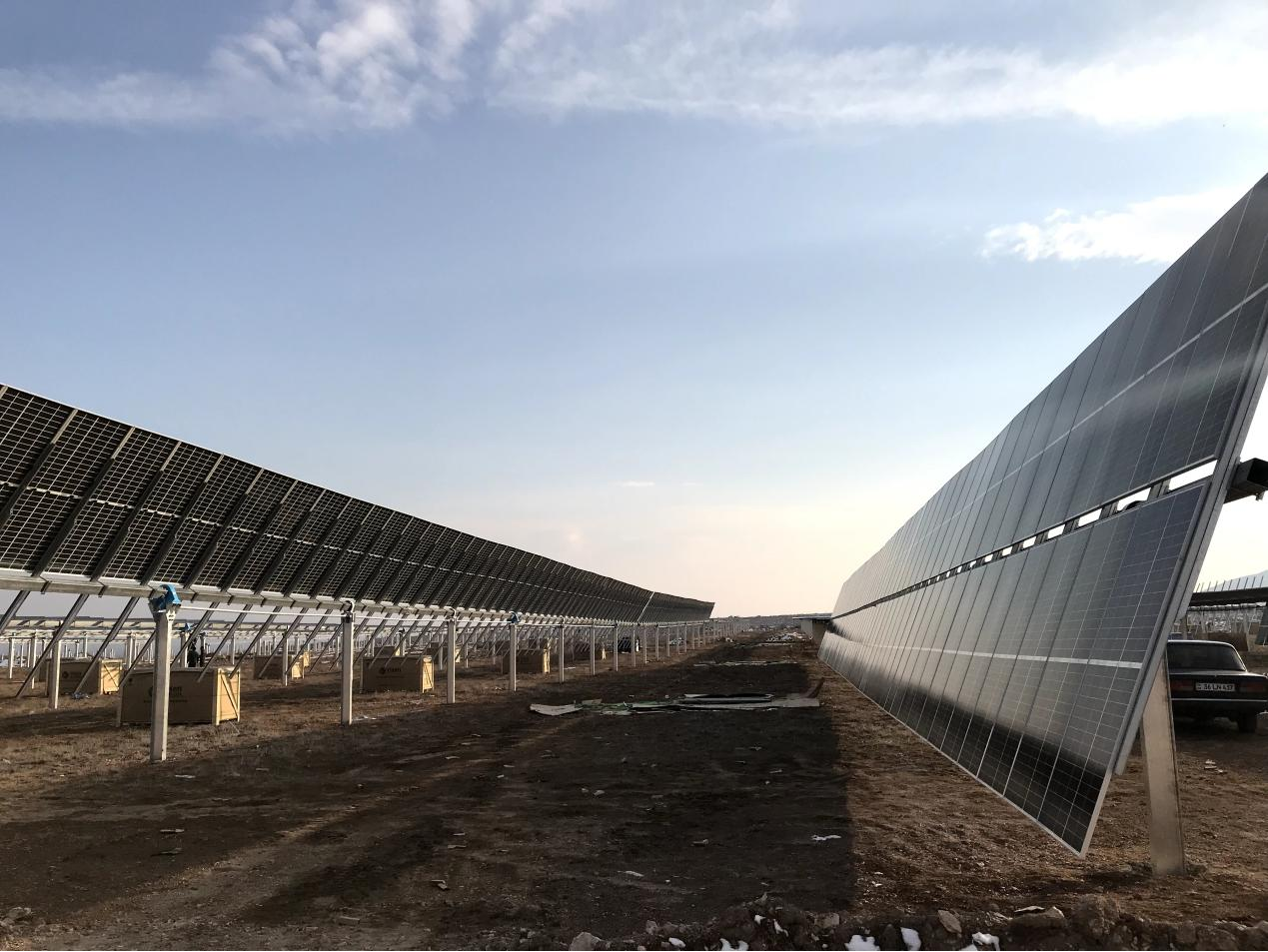
Solar tracker wind stow is the pre-configured defensive position to which a tracker moves when wind speeds exceed a defined threshold.
Sensing and triggering. Most modern trackers integrate an on-site weather station that measures real-time wind speed and direction. But speed alone isn’t enough-gusts and turbulence matter. That’s why graded protection is standard: at moderate winds, the tracker may stow partially; at higher thresholds, it goes to full stow. Redundancy is critical. Reliable wind sensing and automated protection logic help ensure timely stow activation during extreme weather.The stow position debate. The optimal solar tracker stow position is not universal. Flat stow minimizes frontal area but can create suction forces on the underside. High-tilt (e.g., 60°) reduces lift but increases drag. The optimal angle-the solar tracker stow position-depends on tracker geometry and terrain roughness. Most engineering teams settle between 45° and 60° after wind tunnel validation.
Beyond wind: the stow strategy family. The same control infrastructure that enables wind stow also supports protection against other extreme events.
|
Stow Trigger |
Typical Angle |
Primary Benefit |
|
High wind |
Typically 45°–60° tilt |
Minimizes aerodynamic lift and reduces wind-induced structural loading |
|
Snowfall |
Maximum tilt (60°+) |
Encourages snow sliding off modules |
|
Hail |
Near-vertical (70°–80°) |
Reduces impact area and energy |
Structural Design: Drive Systems and the Torque Tube
While stow logic provides active protection, the passive resilience of the tracker depends on its solar tracker wind load design-the engineering of mechanical components to withstand aerodynamic forces without excessive deflection or fatigue.
Single-point vs. multi-point drive.
- Single-point slew drives use a single motor to rotate an entire row. As row lengths increase, however, torsional accumulation becomes a critical issue: the torque tube twists progressively along its length, with the far end lagging behind the driven end. This twisting increases stress concentrations and reduces critical wind speed thresholds.
- Multi-point drive systems address this limitation by distributing synchronized motors along the tracker row. Multiple drive points reduce the effective torsional accumulation length, increase system stiffness, and raise the critical wind speed at which aerodynamic instabilities emerge. The result is a tracker that can achieve longer row lengths while maintaining structural integrity under high wind loads-a direct manifestation of robust solar tracker wind load design.
Small-tilt wind protection scheduling. Rather than simply stowing to a fixed angle, advanced systems use small-tilt scheduling to reduce bending moments during high-wind events. By maintaining a minimal tilt rather than going completely flat, these systems can reduce structural stress while preserving some energy generation.
Cross-section comparison: the octagonal advantage. The torque tube cross-section has a direct impact on both bending and torsional performance.
|
Tube Shape |
Bending Stiffness |
Torsional Resistance |
Weight Efficiency |
|
Square |
Moderate |
Low |
Moderate |
|
Circular |
High |
Moderate |
Moderate |
|
U-shaped |
Low |
Low |
High |
|
Octagonal |
High |
High |
High |
How Wind Performance Is Validated & What Buyers Should Check
Engineering claims about wind performance must be validated through rigorous testing. Buyers should understand the validation hierarchy and know what to look for, particularly when evaluating a supplier’s claimed solar tracker wind load design capabilities.
Wind tunnel testing
The gold standard for wind performance validation is wind tunnel testing, conducted at multiple levels of fidelity:
- Pressure model tests measure static and fluctuating wind pressures across the tracker surface.
- Sectional model tests evaluate aerodynamic coefficients for specific cross-sections.
- Full aeroelastic model tests capture the coupled fluid-structure interaction, including torsional galloping and flutter.
- FEA and numerical wind tunnel simulation. Physical wind tunnel testing is complemented by Finite Element Analysis (FEA) and Computational Fluid Dynamics (CFD) simulations. These numerical tools allow engineers to evaluate performance across a wider range of conditions than physical testing alone can cover, and to optimize designs before building physical prototypes.
Wind Performance Verification: A Buyer’s Checklist for Tracker Procurement
When evaluating tracker suppliers, request:
- Design wind speed and code basis: What wind speed was used for design, and which code was applied (ASCE 7-22 or local equivalent)?
- Stow logic transparency: At what wind speeds do different stow levels trigger? What is the stow angle, and why was it chosen? This directly affects the effectiveness of solar tracker wind stow in real-world conditions.
- Test evidence: Wind tunnel reports, FEA validation documentation, and third-party certification (e.g., TÜV NORD certification to IEC 62817)
- High-wind track record: References from projects in high-wind regions, with documented performance through actual wind events, demonstrating reliable solar tracker wind protection over years of operation.
Antaisolar's High-Wind Tracker Portfolio
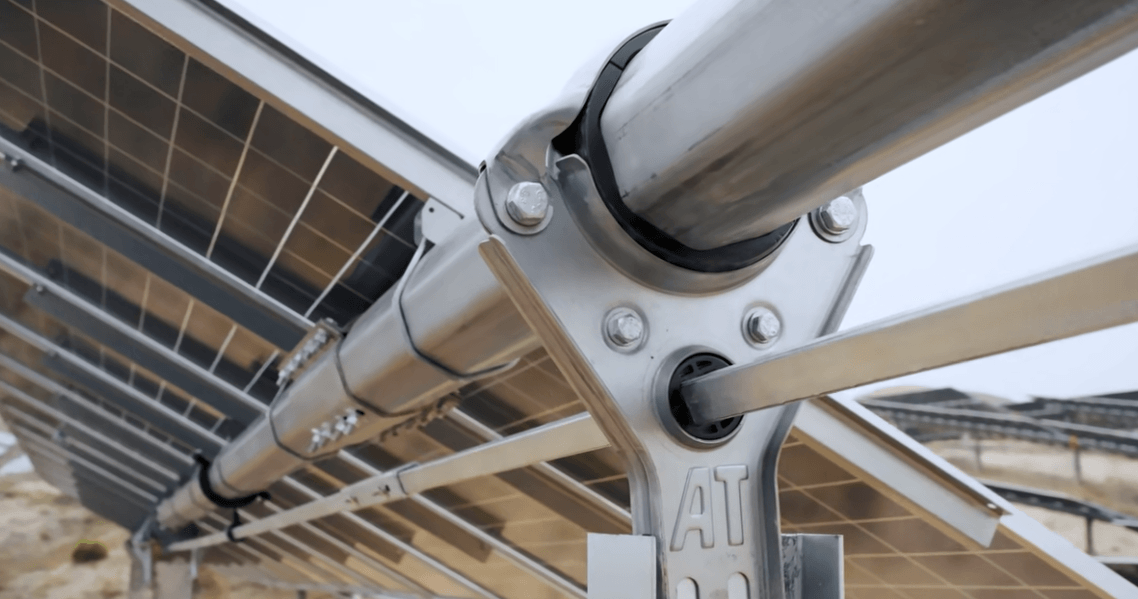
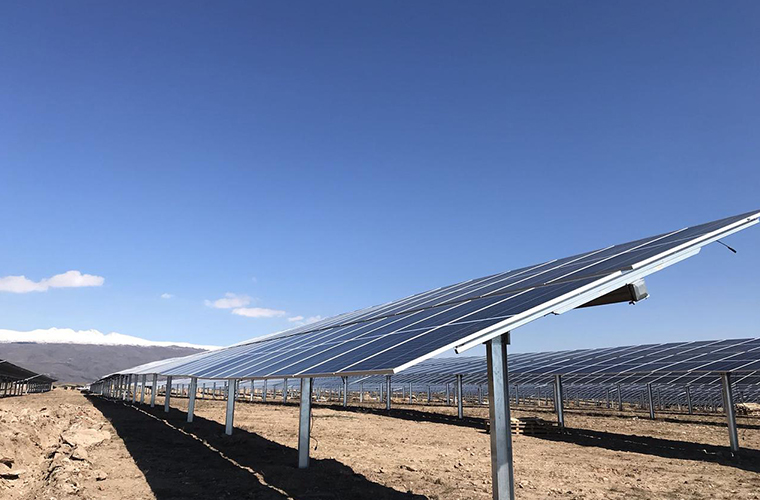
Antaisolar, ranked No. 7 in Wood Mackenzie's 2026 global PV tracker TOP10 and recognized as a Global A-Class tracker manufacturer, offers a portfolio designed for high-wind resilience.
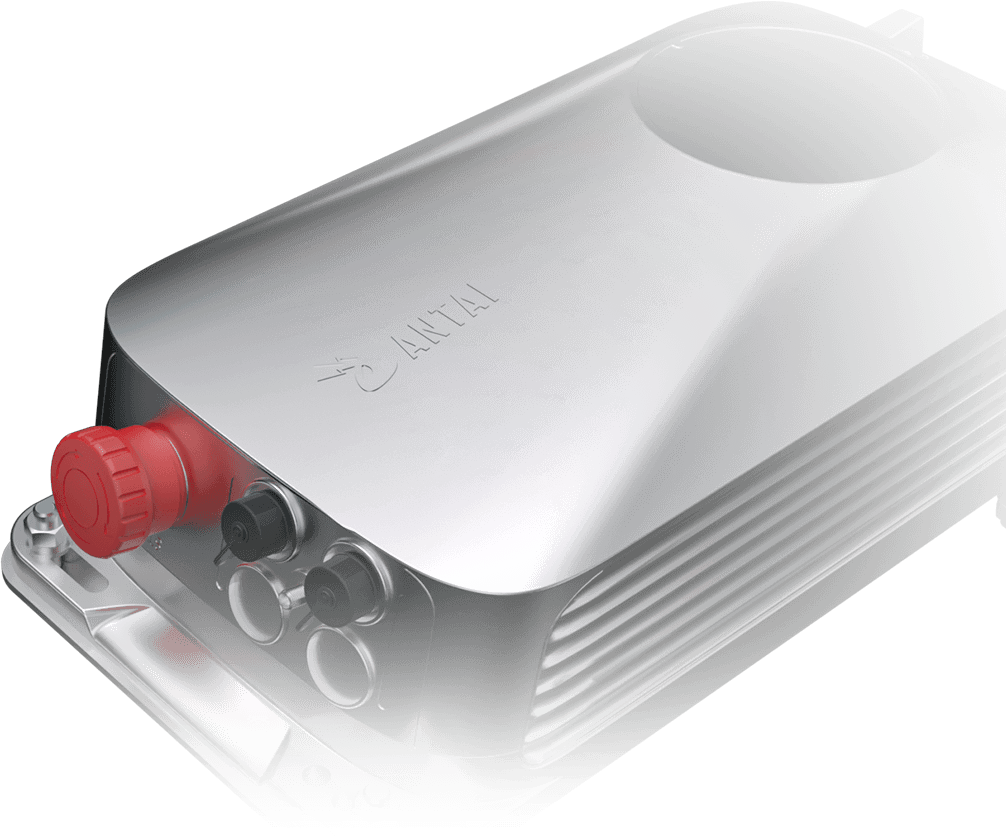
SmartTrail: The Unified Intelligence That Empowers AT-Spark and TAI-Universal
Both AT-Spark and TAI-Universal are powered by the SmartTrail Intelligent Tracking Control System. SmartTrail provides:
- Graded wind protection with multi-level thresholds, optimizing solar tracker wind stow activation timing.
- Four intelligent protection modes covering wind, snow, flood, and hail, each with tailored stow positions.
- Weather sensor compatibility, with each NCU (Network Control Unit) functioning as a micro-weather station to enhance solar tracker wind protection accuracy.
- Automated stow triggered by wind alarms, with seamless return to normal tracking after alerts clear.
- IP65 protection rating and industrial-grade components for reliable operation in harsh environments.
SmartTrail has passed 42 extreme tests and carries IP65 and IK07 protection ratings, confirming its robustness across all aspects of solar tracker wind load design and operational stow performance.
For project‑specific engineering support or to discuss how Antaisolar's tracker portfolio can meet your high‑wind requirements, contact the Antaisolar team.
FAQ
How much energy is lost during wind stow events?
Energy loss depends on stow frequency and duration. In high-wind regions, frequent stow events can reduce annual energy yield by 1–3%. However, this trade-off is essential: the alternative is structural failure. Advanced stow scheduling-using small-tilt positions during moderate winds- can minimize losses while maintaining protection.
What wind speed triggers stow on most trackers?
Trigger thresholds vary by design and site conditions. Many systems trigger initial stow preparations around 15–20 m/s, with full defensive stow at higher speeds. The specific thresholds should be based on project design wind speeds and validated through wind tunnel testing, aligning with the system’s underlying solar tracker wind load design.
Do trackers handle hail and snow differently from wind?
Yes. Hail stow typically uses steep tilt angles (up to 75°) to present a glancing surface to hailstones, reducing impact energy. Snow stow positions modules at maximum tilt to promote shedding. Each stow strategy is optimized for the specific physics of the threat, and the control system can differentiate between events to apply the correct solar tracker stow position.
Source
1. ScienceDirect — Failure investigation of a solar tracker due to wind-induced torsional galloping
https://www.sciencedirect.com/science/article/pii/S135063072200111X
2. IEEE Xplore — Intense Mid-level Wind Speeds and Flat Tracker Tilts during Rear Glass Breakages on Non-Large-Format Bifacial PV Modules on Trackers
https://ieeexplore.ieee.org/document/11132504
3. ScienceDirect — Aeroelastic simulation of torsional vibrations in a single-axis solar tracker
https://www.sciencedirect.com/science/article/pii/S0167610525001862
4. KCI (Korea Citation Index) — Experimental determination of the resistance of a single-axis solar tracker to torsional galloping
https://www.kci.go.kr/kciportal/ci/sereArticleSearch/ciSereArtiView.kci?sereArticleSearchBean.artiId=ART002723344
5. ScienceDirect — Experimental Benchmark for the 3D wind tunnel testing of torsional aeroelastic instabilities in single-axis solar trackers
https://www.sciencedirect.com/science/article/abs/pii/S0167610524002010
6. ScienceDirect — Aerodynamic characterization of SAT arrays to support CFD validation and design standards
https://www.sciencedirect.com/science/article/abs/pii/S0167610526000784
7. pv magazine Global — The effects of wind on single-axis PV trackers
https://www.pv-magazine.com/2024/09/04/the-effects-of-wind-on-single-axis-pv-trackers
8. ASCE (American Society of Civil Engineers) — ASCE/SEI 7-22: Minimum Design Loads and Associated Criteria for Buildings and Other Structures
https://www.asce.org/publications-and-news/asce-7
9. ASCE (American Society of Civil Engineers) — ASCE/SEI 49-21: Wind Tunnel Testing for Buildings and Other Structures
https://sp360.asce.org/PersonifyEbusiness/Merchandise/Product-Details/productId/258306287
10. IEC (International Electrotechnical Commission) — IEC 62817:2014: Photovoltaic systems - Design qualification of solar trackers
https://www.iec.ch/dyn/www/f?p=103:38:407229149228435::::FSP_ORG_ID,FSP_APEX_PAGE,FSP_PROJECT_ID:1276,20,20144
11. TaiyangNews — TaiyangNews Market Survey on Solar Trackers 2026
https://taiyangnews.info/markets/taiyangnews-market-survey-on-solar-trackers-2026
12. pv magazine USA — Passive solar tracker wind stowing boosts energy production
https://pv-magazine-usa.com/2024/05/07/passive-solar-tracker-wind-stowing-boosts-energy-production
13. pv magazine USA — Trackers vs. the elements, part two: working with wind
https://pv-magazine-usa.com/2022/05/26/trackers-vs-the-elements-part-two-working-with-wind
14. pv magazine USA — Trackers vs. the elements, part three: minimizing production losses
https://pv-magazine-usa.com/2022/06/01/trackers-vs-the-elements-part-three-minimizing-production-losses